
Па-за разумным сумневам

.jpeg)


Language





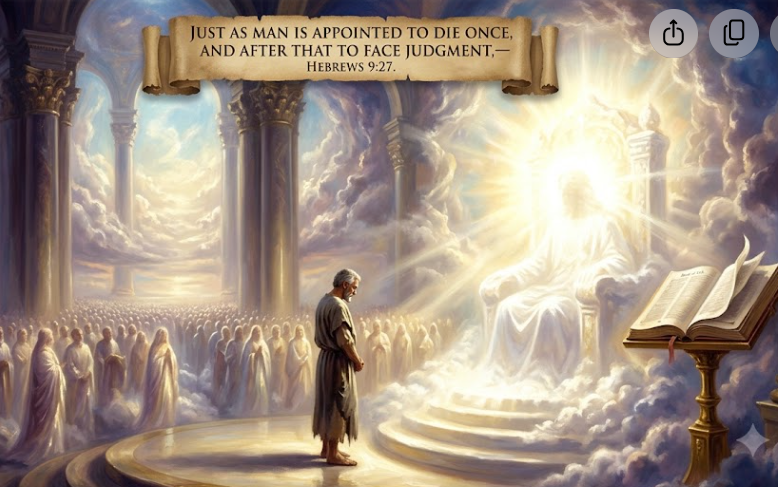
📋 The Final Appointment with God
Just as man is appointed to die once, and after that to face judgment,— Hebrews 9:27
Here is the expanded, 10-question version of the test. It drives home the absolute weight of that single, unavoidable appointment with death and judgment, stripping away every possible excuse a churchgoer might use to stall.
Question 1: The Timeline of Repentance
Traditional church culture often conditions people to think they have plenty of time to align their lives with the truth later on. According to the absolute law of mortality, when does your opportunity to stop practicing lawlessness (anomia) permanently end?
-
A) It extends past the grave, offering a second chance to look at the commandments.
-
B) The exact second your physical breath stops. There are no extensions, no revisions, and no delays.
Question 2: The Representation at the Throne
When you stand at the judgment seat described in Hebrews 9:27, who will be standing there with you to answer for the way you lived your life?
-
A) Your pastor, your spouse, or your church community to help explain your traditions.
-
B) Absolutely no one. You will stand entirely alone, answering directly for whether you physically walked as He walked.
Question 3: The Currency of Judgment
Many churchgoers rely on their regular attendance, church titles, or good intentions as their security. When the books are opened after death, what is the ultimate standard of measurement?
-
A) How popular your church was and how sincere your human traditions felt.
-
B) Literal alignment with the unchanging Word of God and the physical footsteps of the Messiah (1 John 2:6).
Question 4: The Delusion of "Later"
If a conditioned mind looks at a clear commandment today (like the Seventh-Day Sabbath or the dietary laws) and says, "I'll look into that some other time," what are they gambling with?
-
A) A harmless delay that grace will automatically cover.
-
B) A sudden, unannounced arrival at their fixed appointment with death—sealing them forever in a state of unacknowledged betrayal.
Question 5: The Passing Grade Fallacy
Many churchgoers believe they will pass judgment because they are "better than most people" or because they don't do "the really bad sins." What does the mirror of God’s Law say about this excuse at judgment?
-
A) God grades on a curve and compares you to the rest of the world.
-
B) God compares you strictly to His perfect standard. Breaking even one point of the Torah makes you guilty of lawlessness.
Question 6: The Pastor’s Accountability Shield
If your local pastor told you from the pulpit that the Seventh-Day Sabbath was changed or that the dietary laws were done away with, whose head will that error fall on when you stand before the throne?
-
A) The pastor will take the blame, and you will be let off the hook for just following orders.
-
B) You will answer for your own blindness. The blind leading the blind means both fall into the ditch.
Question 7: The Finality of the Closed Door
In Matthew 25, the foolish virgins arrived late, knocked on the door, and cried out to be let in. What does their sudden, permanent rejection teach us about the moment after death?
-
A) That God will eventually relent if you beg long and hard enough after you die.
-
B) That once the door of mortality is shut, the Master's decision is final and absolute.
Question 8: The Myth of the Church Altar
Many rely on a past prayer, a baptism certificate, or an emotional night at a church altar as a permanent insurance policy against judgment. If that past event didn't result in a lifestyle of physical obedience, what is it worth on Judgment Day?
-
A) It is a valid, unbreakable contract of salvation regardless of how you lived.
-
B) It is a worthless piece of paper that proves you talked the talk but refused to walk the walk.
Question 9: The "Depart from Me" Reality
In Matthew 7:22-23, the people rejected by Yeshua were completely shocked. They expected a reward. What was the exact reason they were cast away on their judgment day?
-
A) They didn't do enough church activities or build a big enough ministry.
-
B) They practiced anomia—living a lifestyle completely detached from and opposite to God’s Torah.
Question 10: The Ultimate Fear of Man
If you refuse to obey the Creator's physical commandments today because you are terrified that your friends, family, or church will turn on you, what are you failing to realize about the moment of death?
-
A) That keeping the peace with people on earth is more important than keeping the covenant.
-
B) That every single person you are trying to please today will be completely absent from your judgment. Their opinions will mean nothing when you face the Judge.
-
⚖️ The Verdict Blueprint
-
If you chose "B" for every answer: Awake to Reality. You understand that time is a luxury you do not own. You recognize that the delusion of traditional comfort will instantly vaporize the moment you close your eyes in death, leaving you alone before the Judge.
-
If you made excuses or chose "A": Stalling in Delusion. You are currently banking on a traditional safety net that does not exist in scripture. You are treating a terrifying, fixed appointment like an optional meeting.
-
"Boast not thyself of tomorrow; for thou knowest not what a day may bring forth." — Proverbs 27:1
The clock is ticking down to your appointment. Drop the church excuses, face the mirror, and align your walk with the Messiah before your time runs out.
This diagnostic test uses the same direct, mirroring method. It contrasts the common theological defenses used to excuse a lawless lifestyle with the stark, uncompromised warnings found throughout the scriptures.
📋 The "Profession vs. Walk" Mirror Test
Instructions: Answer these 4 direct questions honestly based on the everyday choices, priorities, and scriptural claims of the modern believer you are evaluating.
Question 1: The Definition of Deception
If this person reads the warning in James 1:22 ("Be doers of the word, and not hearers only, deceiving yourselves"), how do they reconcile their own lifestyle?
-
A) They recognize that "doing the Word" means physically mimicking the obedience, Sabbaths, and righteousness of the Messiah, viewing any other path as self-deception.
-
B) They believe that mentally agreeing with theology or sitting in a pew satisfies the text, using "grace" to redefine a hearer as a doer.
Question 2: The Fruit of Knowing Him
According to 1 John 2:4, "The man who says, 'I know Him,' but does not do what He commands is a liar, and the truth is not in him." When confronted with the actual commandments Christ kept (the Torah), how does this person respond?
-
A) They acknowledge that to know Him is to obey the same instructions He obeyed, striving for total alignment with His walk.
-
B) They claim they "know Him" through an emotional connection or a past prayer, dismissing His actual commands as an outdated yoke meant only for a bygone era.
Question 3: The True Measure of Love
When Jesus says, "If you love me, keep my commandments," and John reinforces it in 1 John 5:3 ("For this is the love of God, that we keep His commandments"), what does "love" look like in this person's life?
-
A) Love is treated as a binding action of physical obedience to the Father's established instructions and statutes.
-
B) Love is treated as a subjective feeling, a sentimental vibe, or an internal emotion that requires no adherence to a biblical calendar, diet, or Sabbath.
Question 4: The Reality of Coming Judgment
Scripture states in John 3:36 that "anyone who doesn't obey the Son will never experience eternal life but will remain under God's angry judgment." Knowing that the Son explicitly warned in Matthew 5:17–19 that not a single jot or tittle would pass from the Law, how does this person view the final accounting?
-
A) They realize that the Son commands an active turn away from lawlessness (sin) and toward the Torah, making repentance a physical U-turn in behavior.
-
B) They assume their confession shields them from any requirement to obey, believing the Son "fulfilled" the Law so that they are free to ignore it without facing consequences.
The Scoring Key: Look back at the boxes checked. If the answers lean toward B, the mirror reveals a sobering truth: it is impossible to claim the destination of the Savior while walking in the exact opposite direction.